Archive | Chiropractic News

RSS feed for this section

Researching Chiropractic: Increased telomere length

Telomere length? Telomeres are parts of our genes that shorten with each cell division; at a critical length, the cell stops dividing or dies. Increasing telomere length can indicate reversal of aging and increase of life span.

Increased telomere length, neck and mid-back pain, and quality of life

A 35-year-old woman, an elementary school teacher, had been suffering from chronic neck and mid-back pain for 5 years following a motor vehicle collision. She also suffered from nocturnal polyuria (frequent urination at night).

Chiropractic examination revealed a forward head posture and loss of normal neck curve consistent with subluxations. Quality of life measures were determined by the Short-Form 36 health survey, and heart rate variability was measured.

After 36 visits, she reported improvement in her nocturnal polyuria, neck and mid-back pain and quality of life. X-rays showed correction of her neck curve (cervical lordosis) and forward head posture. A blood test showed significant improvement in patient telomere length and heart rate variability improved from a health risk to within normal limits.


Fedorchuk C, Lightstone D, McCoy M, Harrison DE. Increased telomere length & improvements in dysautonomia, quality of life, neck & back pain following correction of sagittal cervical alignment using Chiropractic BioPhysics® Technique: a case study. Annals of Vertebral Subluxation Research. June 18, 2018:114-120.

 

Researching Chiropractic: Chronic Constipation

Case study: Enuresis, chronic constipation & dysautonomia in a 9-year-old child

A 9-year-old child suffering from chronic constipation and day and night time bedwetting (enuresis) began chiropractic care for management of subluxations.  Postural abnormalities, vertebral subluxations and nervous system imbalance (dysautonomia) were found upon examination.

The child received adjustments to the upper cervical spine (C1 vertebra) and to the sacrum over a 7-month period. After receiving the first adjustment the parent was thrilled to report that her child had multiple bowel movements as well as cessation of enuresis for three consecutive nights.

The patient continued to report no daytime or nighttime loss of urine control as well as one to two bowel movements per day after receiving specific chiropractic care.

chronic constipation


Rollette D, LaMarca C. Resolution of enuresis, constipation & dysautonomia in a 9-year-old child following chiropractic care for management of vertebral subluxation: a case study & review of literature.  Journal of Pediatric, Maternal & Family Health ~ Chiropractic. June 25, 2018:57-67.

Questions and Answers About Chiropractic

Question: What is the most important area of the spine needing adjustment?brain and spinal chord

Answer: There is much discussion and debate about this. 

Many doctors hold that the top of the spine, the area immediately below the skull, the “upper cervical” (top of the neck/C-1) also known as the “sub-occipital” (base of the skull) is the most important area of the spine. That is because a subluxation there can directly stress the brain and upper spinal cord where millions of nerves may be affected. Indeed, many powerful healings have occurred when this area has been adjusted.

However (there always seems to be a “however” when it comes to the body), there are chiropractic researchers who claim the base of the spine, the sacrum, to be of paramount importance because that area supports the spine. In addition, wrappings around the brain (meninges) anchor to the lower spinal area. Indeed, many powerful healings have occurred when this area has been adjusted.

What is correct?

In all probability, both are! Everyone is different and each person needs to be evaluated for their individual needs. For some people the upper spinal/sub-occipital area needs correction, for others the sacrum or base of the spine needs correction. For others both areas need to be addressed.

Why not ask us about your individual needs?


Researching Chiropractic: Constipation in dogs

Here is a real story about a real dog who just couldn’t poop. Find out how chiropractic can with constipation in dogs.

A constipated Boston terrier

A 14-year-old female Boston terrier was brought in for chiropractic care, referred from a veterinarian. The dog had constipation for six days, constant drinking (polydipsia), generalized weakness, a history of impacted anal glands, dry skin and obesity (46.10 lbs.). The dog had been prescribed a non-steroidal anti-inflammatory drug as well as Chinese medicines. There was no change in her condition.

She was brought in to the chiropractic clinic in a wagon because she was unable to walk by herself. She had to be lifted out of the wagon and placed on the floor. And was unable to even stand without her hind limbs collapsing.    Subluxations were found in the upper neck, mid-back, lower back and sacrum. Immediately after the adjustment the dog could stand and walk a couple of steps without assistance, was taken outside and had a large bowel movement. By her second visit she was healthier than she had been in years.

If you have pet who isn’t pooping, give us a call at 517.627.4547

constipation in dogs


Research: Sullwold P, Lavallie N. Resolution of constipation, polydipsia and generalized weakness in a 14-year-old canine following chiropractic adjustment: a case report & review of the literature. Annals of Vertebral Subluxation Research. September 3, 2018:135-144.

Researching Chiropractic: ADHD

How are chiropractic care and ADHD related?

Chiropractic clinical case histories have been a regular feature of our patient newsletter since its inception. There seems to be no limit to the health problems that respond to chiropractic care. How many people suffering, on drugs, facing a life of limitation could be helped by chiropractic care?

Probably most of them.

ADHD in a 38-year-oldADHD 36 year old man

A 38-year-old male patient entered a chiropractor’s office complaining of chronic headaches and adult onset attention deficit/hyperactivity disorder (ADHD). He was taking Adderall®, OxyContin® and Lortab®.

On examination, vertebral subluxations with correlated neurological imbalance were found.

After two months of chiropractic adjustments he reported a resolution of all his ADHD symptoms; he was able to focus and to exercise.

He was also able to stop taking medications for ADHD.

Do you know someone struggling with ADHD? Please share this article.


Pellegrino A, McNulty E. Resolution of adult onset attention deficit hyperactivity disorder following chiropractic care for management of vertebral subluxations: a case report & review of the literature. Annals of Vertebral Subluxation Research. June 11, 2018:95-107.

Researching Chiropractic: Hearing Loss

Discover how chiropractic care can help with hearing loss.

Chiropractic clinical case histories have been a regular feature of our patient newsletter since its inception. There seems to be no limit to the health problems that respond to chiropractic care. How many people suffering, on drugs, facing a life of limitation could be helped by chiropractic care?

Probably most of them.

Hearing loss in a six-year-old boyhearing loss

A six-year-old boy with diagnosed mild to moderate hearing loss was brought in for care. He was falling behind in class and his speech was difficult to understand. Tympanostomy (ear tube insertion) was recommended.

The child was examined, found to have vertebral subluxations and adjusted.

He had 12 chiropractic visits/adjustments. Hearing, speech and school performance improved following chiropractic care and his hearing was reclassified to normal.

Additionally, he caught up with his class by the end of the third term of school and his speech improved.

Do you know a child suffering from hearing loss?

Please share this information with the child’s parent or caregiver. We can help!

Schedule an appointment today!

517.627.4547


Ng K. Resolution of hearing loss, improved speech & school performance following chiropractic management of vertebral subluxations in a male child: a case study. Journal of Pediatric, Maternal & Family Health, Chiropractic. July 16, 2018:77-83.

Emotions and Your Spine

When we explain that physical, chemical and emotional stress is the underlying cause of subluxations, many wonder how emotions can cause spinal misalignment.

Yet, our language reveals some common connections.

“I just can’t stand it.”
“He’s a real pain in the neck.”
“She’s cramping my style.”
“My feet are killing me.”Emotions and Your Spine

Our emotions are linked to the meaning we give to situations or circumstances.

For example, for some of us, just the sight of a snake produces fear or aversion. But for others, the same snake is a beautiful reptile to be picked up and held—two very different emotional responses to the same thing!

The Fight or Flight Response

The relationship is complex, but simply put, when we become stressed, our body releases a “fight or flight” hormone called cortisol, influencing muscle tension throughout the body.

When muscles supporting the spine tighten, they can misalign spinal bones, affecting the spinal cord and adjacent nerve roots exiting the spine. After all, bones don’t move unless acted on by muscles, and muscles don’t contract unless commanded by the nervous system.

Our emotional health affects our immune system, increasing our susceptibility to colds and infections during or following emotionally difficult times. And while regular chiropractic care won’t eliminate stress, it may help you to better accommodate it.

Call us for an appointment today!

517.627.4547
Emotions and Your Spine

Your Brain and Spinal Chord: An Important Connection

Did you realize how important the connection is between your brain and spinal chord?brain and spinal chord

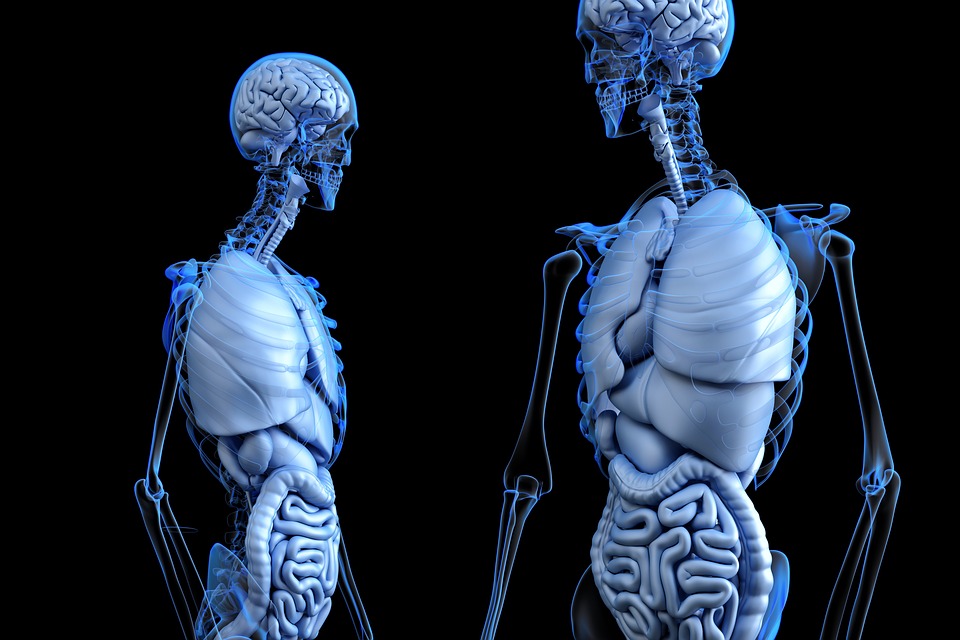
Your brain extends down your back as your spinal cord – a collection of billions of nerves wrapped in a tight bundle.

Messages from your brain travel down nerves through your spinal cord, branch out and reach all your muscles, glands, joints, ligaments and organs. This communication is essential for ideal health.

It’s so important that your spinal cord is surrounded by bones – your spinal column – permitting movement plus providing protection. Sometimes your spinal bones lock up or subluxate and irritate the very nerves they are supposed to protect. The result can be dis-ease or body malfunction.

The goal of your chiropractor is to locate these areas of stress – subluxations – that cause body malfunction, and correct them. DC means more than Doctor of Chiropractic – it means Doctor of Cause.

Do I need to see a chiropractor for the rest of my life?

Answer: No, you need a chiropractor only for as long as you’d like to remain healthy.

That might seem like a coy answer but life is constantly giving us stress – whether it be from gravity, emotional issues or toxins in the environment. In order to deal with these stresses, we need to be functioning at our optimum. A balanced body structure, free from nerve pressure (subluxations), is essential for you to live your fullest.

These stresses quietly build up. See your chiropractor for a “stress-release” from subluxations and you and your family will be healthier.

Related: Do chiropractors help with more than just back problems?

chiropractor

What is Ankylosing Spondylitis?

Chiropractic care can help with all sort of things. Even things that are hard to pronounce like Ankylosing Spondylitis.

Ankylosing Spondylitis in a 38-year-oldankylosing spondylitis

A 38-year-old man entered a chiropractor’s office complaining of upper back pain, neck pain, left groin and bilateral buttock pain, right patella and right medial heel pain. Ten years prior, the patient sought medical consultation with a rheumatologist and was diagnosed with Reiter’s Syndrome, which was later amended to Ankylosing Spondylitis (AS). He was told he’d continue to deteriorate over the years.

Medical care consisted of Pamidronate and Alendronate (prescription medications) that he had discontinued on his own.

The patient reported relief of all his pain symptoms, increased mobility and improved posture. He had 16 appointments for care over a one-year period with constant improvement. He continues care on a periodic basis.


Reference:

Alcantara J, Alcantara J, Alcantara J. improvement in quality of life, posture, range of motion and pain following chiropractic care of a patient with ankylosing spondylitis. Annals of Vertebral Subluxation Research.April 12, 2018:68-76.