How to Avoid High Fructose Corn Syrup

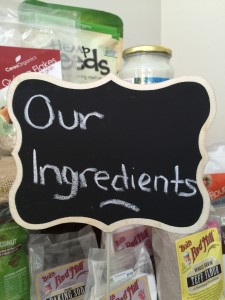
Traditional Eatinga sign that reads "our ingredients" with healthy food behind it

High Fructose Corn Syrup (HFCS) is a highly processed chemical used in a lot (too many) of commercial products as a cheap substitute for regular sugar.

If sugar is bad for your health then HFCS is HORRIBLE!

Not only does it contribute far more to obesity than sugar (1) it produces (in animal studies):

  • Impaired glucose tolerance
  • High insulin levels
  • Insulin resistance
  • High triglycerides
  • High blood pressure

HFCS also contributes to fatty liver and the buildup of dangerous deposits in your blood vessel walls. (2) This leads to plaque buildup, causing increased susceptibility to both strokes and heart attacks, and accelerated aging. (3)

As if that weren’t bad enough, HFCS has now been found to contain mercury. In January 2009, the journal Environmental Health reported that mercury had been found in nearly half of all tested samples of commercial HFCS.

How can you avoid HFCS?

That’s simple, merely read food labels. Other processed sugars to avoid are:

  • inulin
  • iso glucose
  • glucose-fructose syrup
  • dahlia syrup
  • tapioca syrup
  • glucose syrup
  • corn syrup
  • crystalline fructose
  • fruit fructose
  • agave

Which foods have it?

Most sodas are loaded with HFCS as are many fruit juices, ketchup, salad dressings, sauces, baked goods, crackers, cornflake crumbs, chicken broth, stuffing mixes, cereals and more.

NOTE: this weekend it was mentioned on the weekend talk shows that Americans are now buying more WATER than soda…YES!!


  1. Limiting fructose may boost weight loss, Southwestern researcher reports. Published: July 28, 2008.http://esciencenews.com/articles/2008/07/24/limiting.fructose.may.boost.weight.loss.ut.southwestern.researcher.reports Retrieved February 7, 2017.
  2. Gaby AR. Adverse effects of dietary fructose. Altern Med Rev.2005;10(4):294-306.
  3. Flavin D. Metabolic danger of high-fructose corn syrup. Life Extension. December 2008.

You Have a Secret Super Power!

Just like a super hero, you have a super power! toy panda dressed as a super hero

If you use it you’ll be happier, live with reduced stress, avoid depression and even have more energy.

We call it vitamin G.

You don’t get this vitamin in your foods – you can make it yourself.

What is this mysterious vitamin?

Gratitude. Research shows that expressing gratitude makes people happier, healthier and more alive.

How do we cultivate vitamin G?

Here are some ideas:

Start by making an effort to thank people more often. Then advance to counting your blessings at least once a day for 30 seconds.

Do it now! We’ll wait. OK, finished?

Don’t you feel better? See, it didn’t take long and you can do it whenever you have down time.

Here are some more gratitude ideas:

  • If you’re in the car thank it for running properly and even thank your mechanic for doing such a good job (we realize at times this is a bit of a stretch).
  • Be grateful for your health (be sure to mention your chiropractor).
  • If you don’t have ideal health send gratitude to your parts that are working properly.

The Rocky in You!

Be grateful for your family and friends and always thank the Rocky in you. The Rocky in you? We mean your ability to go ten rounds with the champ, getting punched and clobbered, and still be standing. Nurture your inner Rocky – no matter what life hits you with, you can take it, grow and learn from it.

You can do it – it’s really powerful. Those who use this secret super power always benefit from it. (1)


  1. Emmons RA, McCullough ME. Counting blessings versus burdens: an experimental investigation of gratitude and subjective well-being in daily life. Journal of Personality and Social Psychology. 2003:84(2):377-389.

Are You Scared of Germs?

Mysophobiadirty yellow gloves

Also known as verminophobia, germophobia, germaphobia, bacillophobia and bacteriophobia, is a pathological fear of contamination and germs. This fear can be debilitation for some people, but is it ok to have a healthy fear of germs?

Did you know you are walking hotel for germs?

We’re full of germs, bugs, micro-organisms, bacteria, viri, protozoa and more at all times. Billions of these tiny life forms cover every part of our bodies on the outside and on the inside.

In fact, germs outnumber our body cells by about 10 to 1.

There are more bugs in our bodies than there are cells of us. We can’t get rid of germs and shouldn’t get rid of germs. Without all these germs in our bodies we would die – we need them, they are a necessary part of living.

Do germs make us sick?

If germs made us sick, there wouldn’t be a person alive who wasn’t lying in bed sick and moaning with a fever, diarrhea, achiness, rashes, eruptions and more.

Germs live in an ecological balance inside and outside us. If we have a good balance of germs we will be healthy. If we are toxic and chemically out of balance these germs that live quietly within us will multiply and get off balance.

Antibiotics

Antibiotics do not make us healthy. They actually make us sicker by driving disease deep and/or by not letting us detoxify properly.

So really, it might do you more good to have a healthy fear of antibiotics. Hmmm, something to think about.

What Exactly Does a Chiropractor Do?

Are you thinking of going to a Chiropractor for the first time? drawing of spinal column and nerves

Maybe you’re wondering about going to a chiropractor or maybe you’re asking yourself, “What is the doctor doing when I’m in his office?”

We’re glad you asked.

Here’s a simple explanation and it’s the reason why chiropractic has become the most popular drug-free healing art in the world today.

What does a Chiropractor do?

Using his/her hands and various instruments, Doctors of Chiropractic locate and release a serious form of stress in your spine and body structure called a subluxation. Chiropractors are the only professionals trained to do this.

What is a subluxation?

A subluxation is a tiny distortion in your spine and structural system that irritates your nervous system and stresses your entire body. These distortions may be tiny but they can cause big problems. How?

Subluxations make you off balance. This causes your ligaments, tendons and muscles to work harder because an off-balance person is not in harmony with gravity. Sitting, standing and moving take more energy resulting in fatigue and ultimately a feeling of being exhausted all the time.

A person who is out of balance often has “hot spots” or painful areas in their muscles and joints due to overworking certain muscle groups and underworking other muscle groups.

Additionally, subluxations can affect your internal organs and glands – even your brain.

Make an appointment today and start feeling better!

Latest News from Charmaine: March: Spring is Finally Here

Greetings All!Latest News fro Charmaine: March Newsletter

Well, as you get this newsletter, we are on the cusp of Spring (according to the calendar—not Mother Nature!).

This is really not time to throw caution to the wind, as the weather can still sneak in a few snow events yet and the conditions can be less than optimal…So, still be careful out there….AND get checked and adjusted if you have an OOPS!

We will be away from the office April 10th thru the 17th as we are heading over for Alfred’s christening which will happen on Easter Sunday and as is the tradition there, several other babies from the valley will be christened at the Valley church, a hop and skip from Damaris and Anders house.

Meanwhile enjoy the roller coaster weather..AND THIS NICE FULL NEWSLETTER!

See you in the office, on the table, on the mat or under the barbells.

Latest News from Charmaine: February Newsletter: Microgreens

Latest newsGreetings all,

Well, I am back from Grandmother time and, while it was hard to leave the little munchkin Alfred, and his parents, I am glad to be back in my routine again.  Dr. Ray and I will be going back for his christening at Easter…..so we will be away from the office  4/10 thru 4/17.

February is always a strange month…short in calendar days but long in passing as we all get anxious to see spring….It is also a month to stop and assess your health goals…make sure you are eating right, cutting out the sugar and processed foods and drinking LOTS of water.  Check out the article in the newsletter debunking a few nutritional myths.

I have enclosed two wonderful recipes that I came across recently and are now part of my cooking rotation.

Just saw a great little article on (of all programs) Ask This Old House about growing microgreens and it reminded me that I need to get back to growing them again…been a little crazy with the holiday season and new baby..  Anybody interested in a class?  Let me know and if we can get 5 or more people together, we can make it happen.

A giggle I saw on a billboard in Canada recently…The question is posed:  How long is a minute?….The answer is ……It depends which side of the bathroom door you are on!!!

SEE YOU ON THE TABLE, IN THE OFFICE, ON THE MAT OR UNDER THE BARBELLS!

Vegetarian Bolognese

Serves 4-6

Found on Green Kitchen Stories

2-3 tbsp olive oil
1 large onion, peeled and coarsely chopped
3 garlic cloves, peeled and crushed
2 large carrots, peeled
2 sticks celery, rinsed
4 tbsp green olives, stones removed and slightly bruised
1 tbsp fresh basil (or 1 tsp dried)
1 tbsp fresh oregano, rosemary or marjoram (or 1 tsp dried)
125 ml / ½ cup red wine
100 g / ½ cup uncooked beluga lentils (or puy), rinsed
400 ml / 1 ½ cup vegetable stock (or water)
2 bay leaves
2 x 400 g / 14 oz tins crushed tomatoes
sea salt and freshly ground black pepper

To serve
pasta of choice

parmesan cheese or vegetarian equivalent
fresh parsley
olive oil

Heat the oil in a large saucepan on medium heat. Add onion and garlic and sauté for a few minutes. Meanwhile, chop one of the carrots and the celery into 1 cm / 1/2 inch chunks and add them to the pan along with olives and dried herbs (if using). Let soften for a couple of minutes, add the red wine and let cook until the alcohol evaporates. Add lentils, half of the vegetable stock, bay leaves, tinned tomatoes, fresh herbs (if using) salt and pepper. Grate the remaining carrot and add it as well. Bring to the boil, reduce the heat and let simmer for 30 minutes or until the lentils are cooked, stirring from time to time as not to burn the base of the sauce. Add the remaining stock or water, little by little, to loosen the sauce whenever it is looking dry.

Cook your pasta of choice. Serve the sauce stirred through the pasta, topped with a sprinkling of grated cheese, fresh parsley or other herbs and a drizzle of oil.

SWEET POTATO BLACK BEAN ENCHILADAS

THIS IS TOTALLY YUMMY!!!!!

Serves: 8 

From eatingbirdfood.com

Enchilada Sauce

  • 28 ounce can diced fire roasted tomatoes
  • 1½ Tablespoons chili powder
  • 1 Tablespoon ground cumin
  • 2 teaspoons dried oregano
  • 1 teaspoon cinnamon
  • ½ teaspoon cayenne pepper
  • 1 teaspoon salt

Enchilada Bake

  • 1 Tablespoon avocado oil or coconut oil
  • 1 large onion
  • 4 cloves garlic
  • 2 medium sweet potatoes, peeled and chopped into small bite-size chunks
  • 2-3 Tablespoons finely chopped jalapeño
  • 1 cup baby spinach
  • 1 15 oz can black beans
  • 1 teaspoon sea salt
  • 12 corn tortillas
  • 2 cups shredded Mexican cheese
  • toppings: chopped green onions, chopped cilantro, sour cream, avocado

Instructions

  1. Preheat oven to 425°.
  2. Make sauce by combining all ingredients in a blender. Blend until smooth and set aside.
  3. Add oil to a large skillet over medium heat. Once hot add onion and garlic and sauté until fragrant, about 3 minutes. Add jalapeño and sweet potatoes. Cover and cook for 12-15 minutes or until sweet potatoes are tender. The cook time will vary based on how big your sweet potato chunks are. Just be sure they are fully cooked and tender. Add black beans and baby spinach. Toss to combine and remove from heat.
  4. Grab a 9X13 baking dish, lightly grease and start layering ingredients for the bake. Place four tortillas over the bottom of the dish, add ⅓ of the enchilada sauce, ½ of black bean and sweet potato mixture and ½ of the cheese. Add 4 tortillas, ⅓ of sauce and ½ black bean and sweet potato mixture. Add 4 tortillas, ⅓ of the enchilada sauce and top with the remaining cheese.
  5. Bake uncovered at 425° for about 20 minutes or until the top layer of cheese has melted and the bake is hot throughout.

3 FOOD MYTHS BUSTED

Christopher Gardner, a nutrition professor at Stanford University and a long-time vegetarian, debunks common misconceptions about healthy eating.

Now that the holidays have come and gone, it’s time to hunker down and commit to the resolutions we’ve made. For many of us, this means striving for, and more importantly sticking to, a healthier diet.

Unfortunately what that actually entails can be hard to pin down. We live in the age of fad diets: Nutrients, foods, and entire regional cuisines are dismissed as unhealthy, only to be re-embraced shortly thereafter.   With that in mind, I’ve decided to dispel some fundamental misconceptions about how we approach healthy eating.

Carbohydrates

The anti-carb/low-carb craze has gone too far. No matter the health philosophy you prescribe to — be it veganism/vegetarianism/pescetarianism, or a Paleo/gluten-free/low-carb/high-fat diet — you’re likely in favor of eating a wide variety of delicious and vibrantly colorful non-starchy vegetables, such as heirloom tomatoes, butternut squash, carrots, mixed salad greens, swiss chard, and sweet red bell peppers. For carb watchers, the irony here is that these are all carbohydrate-rich foods (65% to 90% of their calories come from carbohydrates). For the record, beans, whole grains, fruits and all other vegetables are carbohydrate-rich foods, too.

So instead of stripping out all carbs from your diet, which would mean eliminating healthy and delicious foods such as the veggies listed above, focus on reducing your intake of added sugars (i.e. sugars not naturally found in fruits and other plant foods) and refined grain.

The average American consumes far too much of both. While the United States Department of Agriculture (USDA) recommends that less than 10% of our daily calories should come from these sugars, the typical American exceeds that benchmark. This is true across all age groups but particularly for children two to 19-years-old. On average, boys and girls in this demographic get around 16% of their daily calories from added sugars. Because the body breaks up and absorbs sugar very quickly, a sugary diet floods the bloodstream with high amounts of glucose. Over time, this can lead to a range of metabolic problems including obesity, diabetes, and heart disease.

In addition to sugar, as a nation we’re eating far too much refined flour, the main ingredient in household staples such as white sliced bread, cereals, cookies, crackers, and pastries. Unlike whole grain flour, refined flour grain is milled to remove its bran and germ, which also removes most of its nutritional value, leaving behind the starchy carbohydrates. Because starch is essentially just long strings of glucose, a diet high in refined flour can lead to the many of the same problems as a diet packed with added sugars.

Bottom line: Instead of vilifying carbohydrates, focus on eating whole, unprocessed meals and avoiding processed foods that often contain refined wheat and added sugars.

Protein

Judging from the explosion of protein products — a category that includes bars, smoothies, even protein water — you’d think our national diet is deficient in this basic food component. Which, frankly, boggles my mind. As a country, we consume more protein per person than any other nation.

While some demographic groups do fall short of protein recommendations, including teenage girls and the elderly) others greatly exceed it. Teenage boys and adult men, for example, average 100 grams of protein a day, nearly double the recommended 56 grams.

In reality, it’s not hard to find naturally protein-rich foods. This goes for vegetarians and vegans as well.

(Side note: Stop asking these folks where they get their protein. They are fine, really!)

While lean meats such as chicken and salmon are good sources of the stuff, protein is also found in plant foods. And despite the widespread misunderstanding around the topic, it’s possible to get all 20 amino acids (including the nine essential amino acids not synthesized by our bodies and thus supplied only by our diets) from a combination of legumes, whole grains, nuts, vegetables, and fruits

Bottom line: Our obsession with artificial protein products is a distraction. In lieu of seeking out protein powder, bars, etc., focus on eating a balanced diet (think lots of vegetables, legumes/beans, nuts, seafood, whole grains and fruits, and less processed snacks and foods high in saturated fat, salt and sugar).

Related: Here’s Why You Can’t Stop Procrastinating

Fiber

What with all the attention being paid to carbohydrates and protein, it’s easy to forget about fiber. We shouldn’t, though. Fiber, which is a form of carbohydrate that we can’t digest and thus can’t be absorbed in our upper small intestine, travels on to our lower intestine and feeds the microbial community living in our colons. This may sound gross, but it’s important: A slew of recent research has connected the health of our gut bacterial populations, known as the microbiome, to our overall health, impacting everything from digestion, to weight, to mental health.

In the absence of enough fiber, the microbiota chew on, and subsequently thin, the colon’s protective mucus lining, which wreaks havoc with our immune function and promotes an inflammatory state that can contribute to a variety chronic conditions, including cardiovascular disease, diabetes, and cancer.

If you’ve noticed a theme in this column, the trend doesn’t stop here. The solution to getting enough fiber is simple: eat more whole foods, especially nutrient-dense vegetables and other plant foods that are rich in fiber.

The final word: Don’t buy into the industry-driven hype. Stop fearing carbohydrates, and stop obsessing over protein products. Healthy eating isn’t about adding supplements or avoiding entire nutrient categories. Instead, it’s about consuming plenty of carbohydrate-rich (which usually means fiber-rich) plant foods, and balancing those with smaller amounts of grains, dairy, meat, and the occasional treat. Love your food, and let it love you back.

Chiropractic Case Studies: Sciatica, ADHD, Developmental Delays, Fatigue

Researching Chiropractic

Chiropractic clinical case histories have been a regular feature of our patient newsletter since its inception. There seems to be no limit to the health problems that respond to chiropractic care. How many people suffering, on drugs, facing a life of limitation could be helped by chiropractic care?

Probably most of them.

Bilateral sciatica in a 77-year-old man.Older man's hands crossed holing a walking stick

The patient was examined for the presence of vertebral subluxation complex using infrared thermography, radiography and video fluoroscopy. Vertebral subluxations and a deviated sacrum were located. After 1½ months of care there was a marked reduction in sciatica symptoms.

Two children with neurodevelopmental issues.

Case 1: An 11-year-old girl with ADHD.young girl in front of tree

She had difficulties with reading comprehension, handwriting and mathematics. Since beginning chiropractic care, her social interaction and emotional state improved. By her 23rdvisit she was in the A range and selected to be tested for the honors program.

Case 2: Developmental delays in crawling and walking in a 13-month-old girl.

The mother described the child’s crawling as a ‘scooting’ motion since the patient’s buttocks remained in contact with the ground. She also was not standing on her own or trying to walk. After four adjustments, she was crawling normally, had taken four steps unassisted, and had not performed the scooting motion since the second visit.

Fatigue, loss of energy and depression in a 30-year-old male.

He also complained of occasional headaches and acid reflux. Over an eight-month period the SF-36 general health survey demonstrated significant improvement particularly in the areas of General Health, Mental Health, and Mental Component Summary with improvements in fatigue and malaise.