What Does a Chiropractor Do?

Chiropractors find the hidden stresses in your body. We do this by analyzing your body structure for imbalances, distortions, and blockages causing nerve interference (stressing your nerves). The distortion causing nerve interference is referred to as a subluxation. 

Untitled design - 2021-09-16T120958.794

Subluxations can be caused early in life by a difficult labor and delivery (vacuum extraction, forceps, etc.) from falls, sports, accidents, even minor twists, and turns. Subluxations are very common – most people suffer from this often-painless condition. Yes, many people go to the chiropractor because of back, leg, hip, neck, shoulder, and other pains, but that’s only a small fraction of those who have subluxations and don’t know it!

Think of subluxations as dental cavities. They are painless but slowly deteriorating your health.

Doctors of Chiropractic spend years studying how to locate and correct subluxations. 

There are many different procedures or techniques chiropractors use to correct or adjust subluxations. They all have the same goal: to free your body from deep stress, create balance, reinvigorate your energies, and ultimately improve the function of all your internal organs, muscles, glands, joints, and ligaments.

Call us to make an appointment today!
(517) 627-4547

TIPS TO STAY HEALTHY THIS FALL 

(CL ADAPTED) ALYSE RURIANI

The transition to the shorter and busier days of fall can be a challenge. To help ease the change, we’ve put together some Fall Wellness Tips to get you ready for the colder months and keep your mental (and physical!) health in check.

TIPS TO STAY HEALTHY THIS FALL

1) Start taking a Vitamin D supplement. We get most of our Vitamin D from the sun, so our intake decreases when the weather is colder since we spend most of our time inside during the fall/winter seasons. If you find you are not getting outside much, a Vitamin D supplement can boost your mood and immune system!

2) Take some time to yourself. Autumn and winter are the Earth’s way of telling us to slow down. Start a journal or track your moods to get more in touch with how you are feeling.

3) Boost your immune system. You can do this by drinking plenty of water, washing your hands often to prevent sickness, and eating nutritious foods.

4) Get yourself ready for Daylight Savings Time. Go to bed earlier when you can, especially the week before the clocks change. Longer periods of darkness = longer periods of sleep!

5) Make some plans for the cold months. In the winter, we tend to hibernate if we don’t have things to keep us busy.

6) Moisturize your skin. Harsh temperatures can make your skin dry. 

7) Buy in-season food. Beets, broccoli, cabbage, eggplant, kale, pumpkin, broths, roasted squash, roots, and sautéed dark leafy greens are all great choices.

8) Stay active! It can be easy to just sit around all the time, but it’s important to get in some movement throughout the day. Raking leaves or shoveling snow counts!

9) Wear layers and protect your body from the dropping temperature. Make sure you have gloves, a scarf, earmuffs, a winter coat, warm socks, and snow boots!

10) Do some “spring cleaning” in the fall. Clean out your closet, organize that back room, and rid yourself of things you don’t need.

11) Prepare your home for possible extreme weather conditions. Do you have a shovel and/or snow blower? Do your flashlights have batteries? Is your heat working okay? And think about your car too…Blankets, Socks, Hunter heating pads. power bars and water will all be welcome in a stressful situation

12) Get some books to read and shows to watch. Who doesn’t want to sit by the fire on chilly winter nights and read a good book or binge-watch some Netflix?

13) Keep a schedule. The cold months can seem to drag on and push us into isolation. Stay on track by scheduling time in your day to do things you like to do.

14) Be kind to yourself. The holidays can cause weight gain, the shorter days can cause low mood, and the season change can throw your body out of balance. Listen to your body and give it what it needs, and don’t beat yourself up! Try reframing negative thoughts into positive ones.

AND BEST OF ALL, MAKE SURE TO GET YOUR SPINE CHECKED REGULARLY AS THE MINOR SLIPS AND FALL OF FALL/WINTER CAN KNOCK YOUR SYSTEM OUT OF WHACK!

Call us to make an appointment today!
(517) 627-4547

ESSENTIAL INGREDIENTS OF A BUDDHA BOWL

A Buddha bowl is essentially a simple, one-bowl meal, typically vegetarian or vegan that includes rice, legumes, fresh vegetables, and plant proteins. Often they are served cold, but some versions are served with a warm base.

  1. whole grain or riceUntitled design - 2021-08-30T165426.328
  2. Baked Tofu, Tempeh, or plant-based protein like beans or legumes
  3. Fresh or roasted vegetables
  4. Greens or sprouts
  5. Sauce or Dressing
  6. Nuts or seeds!
  7. Your favorite, wide ceramic bowl!

HOW TO BUILD A BUDDHA BOWL:

The best Buddha bowls start with a base of rice or whole grains which can be served cold or warm. Top with plant-based protein (tofu,  edamame ( green soybeans usually sold frozen),, then greens and fresh veggies. Next, drizzle with dressing or sauce and sprinkle with seeds or nuts. Top with fresh sprouts or microgreens.  This can be made as individual servings to taste or one large bowl for everybody to enjoy!

Researching Chiropractic: Urinary incontinence, Return of hearing, Kidney problems

Chiropractic clinical case histories have been a regular feature of our patient newsletter since its inception. There seems to be no limit to the health problems that respond to chiropractic care. How many people suffering, on drugs, facing a life of limitation could be helped by chiropractic care? 

Probably most of them.

Urinary incontinence in an older woman.Untitled design - 2021-08-30T164257.772

A 75-year-old woman suffering from chronic urinary incontinence (involuntary leakages from the bladder) began chiropractic care. This is a too-often condition in the elderly. Her incontinence began after she had been injured in an accident and had a surgical mesh procedure. She had to urinate as often as three times per night for the previous six years greatly impairing her ability to sleep peacefully. 

Chiropractic examination (which included X-rays) revealed the woman had vertebral subluxations in the cervical (neck) and lumbar (lower back) spine. Her chiropractic care consisted of 36 weekly visits. She had a complete resolution of her urinary incontinence. She was happy to report that she was now able to sleep through the night. (1)

Return of hearing in a young girl. Untitled design - 2021-08-30T164324.240

A 9-year-old girl was brought in by her parents for chiropractic care for her bronchitis, upper back pain, headaches, and left ear hearing loss. Her medical doctor diagnosed her with bronchitis; an ear, nose, throat, and allergy specialist performed an audiogram which showed sensorineural hearing loss (SNHL) on the left that was considered to be a birth defect (congenital). The girl received a hearing aid in her left ear and was given preferential seating in school.

The patient received chiropractic adjustments in her upper cervical (neck) and thoracic (mid-back) spinal regions. The next day at school, she noticed that she was able to hear without the use of her hearing aid. Her mother tested her later that evening by whispering to her into her left ear. Her hearing was normal. (2)

Kidney problems and chiropractic.Untitled design - 2021-08-30T164403.292

A 42-year-old man began chiropractic care. His initial complaints were of neck, lower back, and right pelvic pain. Each of his pain locations was rated as a 7, on a scale of 0 to 10 with 10 being the worst pain ever. He also experienced numbness in his right arm into his right pinky, as well as right shoulder pain. 

He was medically diagnosed with abnormal kidney function as his blood analysis revealed elevated serum creatinine levels and decreased glomerular filtration rate. He reported that the low back and pelvis pain has been present for almost 30 years when he suffered injuries playing high school football. He was taking Lisinopril® and Bisoprolol® to help manage his high blood pressure and Crestor® for cholesterol. Prior to seeking chiropractic care, he went to medical doctors for his back and neck pain, with improvements reported.

His first chiropractic adjustment was to his cervical (neck) and thoracic (mid-back) spinal segments, sacrum, and cranium. He reported a dramatic improvement in all pain complaints, a reduction in serum creatinine levels, and an improved glomerular filtration rate following 6 months of care. (3)

Do you know anyone suffering from these things?

Please share this article with them and gently suggest they make an appointment to see us.  517.627.4547


  1. Fedorchuk C, Simon D. Resolution of urinary incontinence in a 75-year-old female undergoing chiropractic care for correction of vertebral subluxation: a case report & review of the literature. Annals of Vertebral Subluxation Research. June 18, 2021:36-42.
  2. Briegel L, Briegel L. Resolution of sensorineural hearing loss in a 9-year-old child following chiropractic care to reduce vertebral subluxation: a case report & review of the literature. J Pediatric, Maternal & Family Health, Chiropractic. April 28, 2021:26-31.
  3. DiNardo AM, Stotz B. Normalization of serum creatinine levels, estimated glomerular filtration rate & dysautonomia following chiropractic care to reduce vertebral subluxation: a case report & review of the literature. Annals of Vertebral Subluxation Research. December 15, 2020:171-177


Why do some people get sick and others do not?

Chiropractic Questions and Answers

Q. Why do some people get sick and others do not?

That question was discussed by DD Palmer, the discoverer of chiropractic. 

Untitled design - 2021-08-30T163554.949

Palmer wrote extensively on the perfection we are born with and the many ways that perfection can be perverted or prevented from functioning. When we function at less than 100%, when we are unbalanced with spine and nerve stress, when we have physical blockages that decrease life energy flowing through us (subluxations), we suffer from dis-ease, which is a common precursor to diseases of all kinds.

Dr. Palmer was very much ahead of his time when he described the three causes of dis-ease (body malfunction) as follows:

Thoughts-emotional stress. The emerging science of PNI (psychoneuroimmunology) studies the intimate and intense relationship amongst thoughts, brain, and immune system function. This confirms Palmer’s original insights into the relationship between the mind and body. See the article below on marriage and longevity for an example.

Trauma-structural distortions affect and weaken our ability to adapt to all environmental stresses. Physical traumas may be from birth, macro-trauma such as sports injuries, car accidents, and similar events, or micro-trauma such as always working in the same position, always swinging a golf club or tennis racket the same way (and on one side), or living on a planet with gravity-meaning everyone on this earth.

Toxins-poisons that we are exposed to that are internal or endogenous (produced from within) or external or exogenous poisons that we are exposed to from the environment. 

Internal toxins can be from a poor diet, an unbalanced intestinal flora, dental/oral infections from root canals, and unhealed wisdom tooth sockets. External toxins can be from the pesticides and herbicides that are in our foods (always eat organic foods), vaccinations (a toxic brew of chemicals), air pollution, smoking, anesthesia, drugs (prescription as well as otherwise), and even EMF-electromagnetic frequency radiation (i.e., cell phones and cell phone towers), among others.

Chiropractic care permits your body to function at its best. By releasing old physical/structural stress from your spinal column the chiropractic adjustment also releases stress from your spinal cord and brain. This improves your nervous system (which your mind uses). That improved function helps your ability to detoxify and rid your body of any internal and external poisons you have accumulated. 

Many chiropractors have noticed that in addition to the above, regular chiropractic care may increase a person’s sensitivity to their state of health and they naturally begin to eat better and avoid unhealthy toxins and procedures.  Every organ, gland, system, and part of your being is interconnected. Improving any physical, mental, or spiritual aspect of your well-being improves the health of every other part of your mind and body.

Make an appointment today and start to feel better.

517.627.4547

Chiropractic and Your Infant

How do infants benefit from chiropractic care? 

Chiropractic for infants? Do they have low back pain? Hardly-yet infants need chiropractic care to ensure that the stress of labor and delivery hasn’t damaged their spines and delicate structural systems. Other stresses they receive can involve falls-statistics tell us that nearly half of all babies have had a fall from a height (off the changing table, off the bed, etc.). Chiropractic care will help ensure a healthy baby with better resistance to disease and better ability to discharge toxins. Also, correcting subluxations may help a baby who is ill return to health more quickly and more comfortably. 

Untitled design - 2021-08-30T163002.371

There are many case histories of chiropractic helping children with all kinds of conditions-asthma, colic, difficulty breastfeeding, ear infections, autism spectrum disorder, vision and hearing disorders, constipation, neurological conditions-no matter what conditions babies may have, chiropractic care can help them grow into healthy, happy children. (1-4)


A note from Dr. C We can tell you many stories of how wonderfully children respond to care..ask us!  (some stories involve celebrating poopy diapers!)


  1. Cuhel JM, Powell M. Chiropractic management of an infant patient experiencing colic and difficulty breastfeeding: a case report. Journal of Clinical Chiropractic Pediatrics. 1997;2(2):150-154.
  2. Harris SL, Wood KW. Resolution of infantile Erb’s palsy utilizing chiropractic treatment. JMPT. 1993;16:415-418. 
  3. Toto BJ. Chiropractic correction of congenital muscular torticollis. JMPT. 1993;16:556-559.
  4. Gutmann G. The atlas fixation syndrome in the baby and infant. Manuelle Medizin. 1987;25:5-10.

TEXAS/COWBOY CAVIAR 

15 Minute  serves 6

  • 1 can (15 oz) each) black beans, black-eyed peas, drained and rinsedUntitled design - 2021-07-29T164942.086
  • 1 can (12 oz) (341 ml) corn, , (don’t drain)
  • 1 can (10 oz) (284 ml) mild chopped tomatoes with green chilies, ( I like Rotel Brand)
  • 1/2  each red yellow and orange pepper, diced
  • 1/3-1/2 cup red onion, diced
  • 1/3-1/2 cup cilantro, chopped and loosely packed

Southwestern Vinaigrette Dressing ingredients:

  • 1 tablespoon oil  
  • zest of 1 lime
  • 2 tablespoons lime juice ( approximately 1 lime)
  • 2 tablespoons red wine vinegar
  • 2 teaspoons pickled jalapeño juice
  • 2 teaspoons sugar
  • 1 teaspoon Chili Powder
  • 1/2 teaspoon ground cumin
  • 1/2 teaspoon garlic salt (not powder)
  • 1/4 teaspoon onion powder
  • 1/4 teaspoon salt
  1. First, whisk together the ingredients for the Southwestern Vinaigrette in a small bowl and set aside
  2. Now add the drained and rinsed beans and black-eyed peas to a large salad bowl along with the corn, tomatoes, and the chopped onions, veggies, and cilantro. Pour the vinaigrette dressing over the top.
  3. Mix well and serve right away or chill in the fridge for 30 minutes and give it a mix before serving.

Easy Peasy! Enjoy!

SUPER QUICK SUMMER MEAL FOR THE FAMILY

One-Pot Farmer’s Market Pasta in less than 25 minutes   Prep Time10 minutes Cook Time15 minutes Serves 4-6

IngredientsUntitled design - 2021-07-29T164542.607

  • 12 oz spaghetti 
  • 1 medium red onion peeled, halved, and sliced
  • 1 small summer squash halved lengthwise and sliced
  • several stalks asparagus cut in 2-inch pieces
  • a handful of broccoli florets cut in half
  • 2 cups cherry tomatoes halved             
  • 1 colorful bell pepper chopped
  • 2 cloves garlic peeled and minced
  • 2 handfuls of baby greens 
  •  1 tsp salt and lots of fresh cracked pepper to taste
  • 1/2 tsp red pepper flakes, optional          
  • 2 Tbsp olive oil
  • 1 cup dry white wine (optional..replace with water)
  • 3 1/2 cups water/stock
  • 1 Tbsp white wine or sherry vinegar (a must!)
  • 1 cup shredded hard Italian cheese (optional for vegans)

Garnish

  • halved cherry tomatoes
  • 1/2 cups finely shredded basil leaves

Directions

  1. Put everything except the cheese, into a large pot. Add the wine and water (measure exactly since you will not drain the pasta) to the pot and bring up to a boil. If your pasta doesn’t fit completely into the pot, nudge it down into the water as it softens. Cover the pot while it comes to a boil then uncover and boil for about 7-9 minutes, until the pasta is just al dente. Babysit the pan a little bit to ensure that the pasta doesn’t stick. Don’t overcook the pasta, there will still be some water left in the pan.
  2. Toss the pasta with the cheese, and serve with the extra tomatoes and lots of fresh basil.

notes and variations

  • Don’t skip the tomatoes.  The rest of the veggies remain intact, but the tomatoes break down and help to form a sauce with the starchy pasta water and the cheese. You can use lots of different veggies for this dish, whatever looks good. Mushrooms would work well, also summer squash, cauliflower. Tomatoes are a must, though.
  • Don’t skimp on the cheese, for the reason just mentioned. 
  • Pay attention to flavoring the pot.  In addition to salt, I like lots of black pepper, red pepper flakes, and my secret flavor weapon, a dash of sherry vinegar. 
  • Don’t forget the fresh garnishes.  Reserve some little tomatoes and a big handful of fresh basil for topping the cooked pasta.

BASED ON A MARTHA STEWART RECIPE THAT IS A ADAPTATION OF AN ITALIAN FAMILY RECIPE

Researching Chiropractic: More Case Studies

Chiropractic clinical case histories have been a regular feature of our patient newsletter since its inception. There seems to be no limit to the health problems that respond to chiropractic care.

Chiropractors release serious stress (subluxations) from your body. This releases energy for healing, regeneration, and growth.

All people (especially children) need a body free of blockages and stress so they’ll have strong, happy, and healthy lives.

How many people suffering, on drugs, facing a life of limitation could be helped by chiropractic care?

Probably most of them.

Below are some clinical cases illustrating the potential of chiropractic adjustment to correct subluxations. 

Breech baby turns after chiropractic care. Untitled design - 2021-07-29T163256.628

A 26-year-old female in her 27th week of pregnancy with her second child presented for a chiropractic visit after experiencing low back pain. One week later an ultrasound determined the baby was in a breech position. She had a previous natural birth with no complications and was beginning chiropractic care with hopes of avoiding a cesarean section. 

After a series of chiropractic adjustments, the baby moved from a breech position to a normal vertex (or head down) position confirmed through ultrasound. (1) 


Glaucoma, carpal tunnel, hand numbness, and chiropractic care. Untitled design - 2021-07-29T163323.582
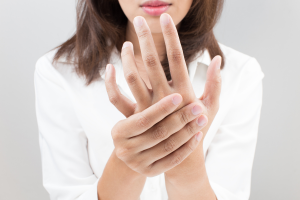
A 40-year-old woman suffering from numbness in her arms and hands, and other problems such as neck and shoulder pain, dizziness, headaches, migraines, vertigo, anxiety, low back pain, right hip pain and clicking, numbness in the bottom of her feet, chronic fatigue, and cervical and lumbar intervertebral disc “problems” began chiropractic care. 

Subluxations were located in her sphenoid (cranial bone), occiput (base of the skull), neck (C1, C2, C5, C7), sacrum, and coccyx (tailbone). The patient reported moderate improvement in low back pain and headaches, much improvement in neck pain, shoulder pain, hip pain and clicking, and dizziness, and resolved numbness in both her hands and feet. By the 15th visit, she reported a 90% overall improvement and decided to cancel scheduled carpal tunnel syndrome (CTS) surgery.

She had also been diagnosed with borderline glaucoma that was steadily worsening. Glaucoma is increased pressure inside the eyeball (intraocular) and is the second leading cause of blindness. By her 15th visit, her intraocular pressure had dropped and her ophthalmologist felt that medical intervention was no longer necessary. (2) 


Arnold-Chiari malformation, headaches, motion sickness, and hearing deterioration. Untitled design - 2021-07-29T163453.580

A six-year-old male diagnosed with vertebral subluxation and Arnold-Chiari malformation suffered from headache, motion sickness, and progressive hearing deterioration. 

The boy’s chiropractic examination consisted of spinal heat reading and X-rays. A subluxation was detected at C1 – the top cervical or neck vertebrae – and the patient was adjusted there. A post adjustment X-ray analysis determined that more care was needed at C2 after which the child received a C2 adjustment. After the first adjustment, the patient reported that his headaches had been eliminated. (3)

Do you know anyone suffering from these things?

Please share this article with them and gently suggest they make an appointment to see us.  517.627.4547


  1. Falk DA, Stinson RA. Resolution of breech presentation confirmed by ultrasound following Webster Technique: a case study. Journal of Pediatric, Maternal & Family Health – Chiropractic. 2017;2:74-77.
  2. McClimon ME, McClimon DG, Krotee MW. Improved intraocular pressure in a 40-year-old female following chiropractic care to reduce subluxation. Annals of Vertebral Subluxation Research. June 1, 2017:101-112.
  3. Drury R, O’Keefe C. Resolution of symptoms from Arnold-Chiari malformation in a 6-year-old male following reduction of vertebral subluxation with knee-chest upper cervical care: case report & selective review of the literature. Journal of Upper Cervical Chiropractic Research. May 1, 2017:12-21.


A Poison Ivy Parody + Good Advice

Poison Ivy, Poison Ivy

The song Poison Ivy is catchy, with exceptional lyrics and the best-sung version by the Coasters

Measles make you bumpy and mumps’ll make you lumpy Poison Ivy

And chicken pox’ll make you jump and twitch

A common cold’ll cool you and whooping cough’ll fool you

But poison ivy’s gonna make you itch

You’re gonna need an ocean

Of calamine lotion

You’ll be scratching like a hound

The minute you start to mess around

Poison ivy, poison ivy

Well late at night when you’re sleeping

Poison ivy comes a creeping around

How to get rid of Poison Ivy

But if the plant’s oils touch your skin while you are gardening, walking in the field, even petting your dog or cat who rolled in it – you better wash with some good poison ivy soap ASAP to wash off the oil causing irritations (urushiol). The oil can last for years, so wash any utensils, gloves, and tools you used too. 

If it got into your skin you may suffer from intense burning and itching with ugly-looking pustules and red raw skin. Scratching makes it worse and if you start you may do it until you bleed. What to do?

There are some natural, safe, effective, and inexpensive ways of getting rid of poison ivy symptoms. Save this information for future use.

Use essential oils.

Use a blend of lavender, melaleuca (tea tree oil), and peppermint oils. Even one oil by itself will work but the blend is best.

Use homeopathy.

An excellent homeopathic remedy for poison ivy is Rhus Toxicodendron. Fortunately, most health food stores are carrying homeopathic remedies. A strength of 12C or 30C is recommended.

The above work very well. People have reported using others remedies such as topically applying witch hazel, cold coffee, oatmeal paste, baking soda bath or paste, alcohol, and apple cider vinegar to the affected areas. 

The next time you find yourself in a potentially dangerous garden, do yourself a favor and wear gloves, long pants, long sleeves, or even better, pay an expert to remove it all.

Chiropractic care is not a treatment for poison ivy but it does reduce stress on your nervous and immune systems and can help your body work more effectively to rid it of toxins. We recommend coming in for an adjustment. Don’t worry, the rash is not contagious (even if it looks yucky).