
Archive by Author

What is Forward Head Posture?

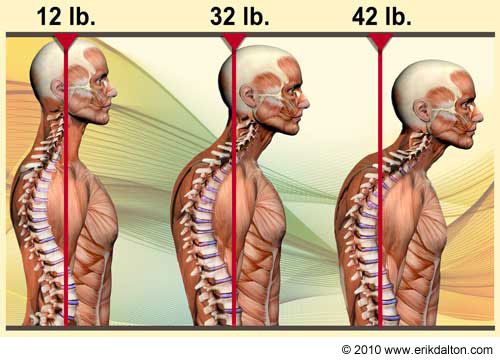
In the picture shown right, the first image represents “perfect” head posture. A line dropped from the center of the external auditory meatus (EAM) would land directly in the center of the shoulder.

For every inch your head moves “forwards”, the head “gains” 10 pounds in weight, as far as the muscles in your upper back and neck are concerned, as they have to work harder to keep the head (chin) from dropping forwards onto your chest. This forces the muscles that raise the chin to remain in constant contraction, putting pressure on nerves, stressing the spinal muscles and joints and often resulting in headaches, TMJ problems and more.

What are the consequences of forward head posture?

  1. Long term forward head posture (FHP) leads to long term muscle strain, disc herniations and pinched nerves (Mayo Clinic Health, March 2000).
  2. Decreased respiratory muscle strength and dysfunction in chronic neck pain patients has strong correlation in patients with FHP (Cephalgia, February 2009).
  3. “Every inch of FHP, increases the weight of the head on the spine by an additional 10 pounds.”  (Kapandji, Phys of Joints Vol. 3).
  4. “Loss of cervical curve stretches the spinal cord by 5-7cm and causes disease.” (Dr. Alf Breig, Neurosurgeon and Nobel Prize Recipient).
  5. “90% of the stimulation and nutrition to the brain is generated by the movement of the spine,” says Dr. Roger Sperry, Nobel Prize Recipient for brain research. He demonstrated that 90% of energy output of brain is used in relating the physical body to gravity. Additionally, Dr. Sperry demonstrated that 90% of the energy output of the brain is used in relating the physical body to gravity.  Only 10% has to do with thinking, metabolism, and healing, so when you have forward head posture your brain will rob energy from your thinking, metabolism, and immune function to deal with abnormal gravity/posture relationships and processing.
  6. Dr. Rene Calliet, MD, Director of the Dept. of Physical Medicine and Rehab at University of Southern California, FHP can add up to 30 pounds of abnormal leverage on the cervical spine.  This can pull the entire spine out of alignment. FHP results in the loss of vital capacity of the lungs by as much as 30 %. This shortness of breath can lead to heart and blood vascular disease.  The entire gastrointestinal system is affected, particularly the large intestine. Loss of good bowel function and evacuation is lost in FHP. It causes an increase in discomfort and pain, because proprioceptive signals fromthe first four cervical vertebrae are a major source of the stimuli which create the body’s pain controlling chemicals(endorphins). With inadequate endorphin production, many otherwise non-painful sensations are experienced as pain. FHP dramatically reduces endorphin production.
  7. FHP has been shown to flatten the normal neck curve, resulting in disc compression, damage, early arthritis, decreased quality of life and a shortened life span.
  8. Forward head posture is a silent progression that can lead to irreversible damage.

Help your self and other by assessing each other’s posture. Simply look at them from the side and see if the middle of their ear lines up with the middle of their shoulder. If it does, congratulations, that’s awesome. You are on your way to better health. If it doesn’t line up, then call us to schedule a Chiropractic spinal checkup.
 

Chiropractic at the Olympics

More than 100 chiropractic doctors from North America are treating athletes at the  2012 Olympics. They have been chosen to help members of USA judo, weightlifting, wrestling and sitting volleyball win a medal. This is the first time that a large group of chiropractic doctors have traveled with Olympic bodies to represent the US at the games. It is also the largest contingent of chiropractic doctors to have been selected to support and care for athletes.

Terry Steiner, 2012 USA Women’s National Coach commented, “I have seen a tremendous value in our partnership as it pertains to the performances of our Olympic team. I can further see the positive, life-long effects these doctors can have on their lives after London.”

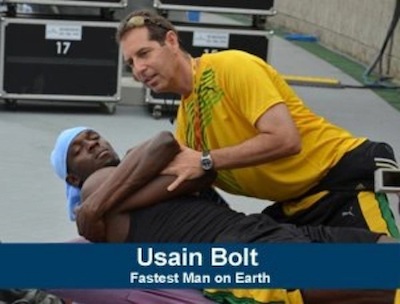
Chiropractic doctors are not only being utilized by athletes at the 2012 Olympics but also by the 2010 Major League Soccer World Champions, Colorado Rapids, US Martial Arts, the International Brazilian Jujitsu Federation, many top MMA teams, and hundreds of athletes and teams at all levels and all over the world including ‘World’s Fastest Man’, Usain Bolt.

Read more…

Usain Bolt’s (fastest man alive) secret – Chiropractic

What’s Usain Bolt’s secret to being the fastest man alive? One of them is Chiropractic. Several Olympic athletes receive Chiropractic adjustments on a regular basis. So when watching the Olympics notice how many talk about Chiropractor or who are adjusted on tv, just like Usain Bolt!

Usain Bolt receiving Chiropractic care from Dr Michael Douglas

The Right Way To Sit

With so many people sitting in front of a computer all day long, plus time sitting while driving, and time watching TV, learning how to sit properly and take ‘microbreaks’ to avoid muscular imbalances is vitally important.

Use this checklist for ‘proper sitting’ while driving a car or sitting your office:

  • Sit up against the seatback with a tall spine.
  • Adjust the seat pan length so you can permit a fist to pass between the front of the seat and the back of the
    upper calf.
  • Adjust the back rest in the car up and down to your comfort level. It should be placed firm against your back and
    may be tilted a bit backwards for more comfort. Your head should rest comfortably against the head rest.
  • Adjust your hips so that they are level and square.
  • Lightly draw your belly button in towards your spine.
  • Lightly push the back of the head against the head rest while maintaining a level chin.

Learning how to sit right can save you from spine complications later in life. Make sure to talk to us about assessing the way you sit and whether it is affecting your health.

Staying Active Can Add Years To Your Life

Whether you exercise every day or not, you still need to cut down the time you spend sitting in a chair.

Sitting for more than three hours a day can cut two years off a person’s life expectancy, even if he or she exercises regularly, a new study finds. Watching TV for more than two hours a day can shorten life expectancy even further, by another 1.4 years.

The findings suggest that when it comes to gleaning health benefits from physical activity, it may not be enough just to get the recommended amount of daily exercise — the government advises about a half-hour of moderate activity a day for adults. But what about the other 23.5 hours of every day? Researchers say it’s important not to spend it sedentary or sitting.

In the same way that both pushing the gas and hitting the brake can adjust the speed of your car, researchers say that physical activity and sedentary behavior independently affect your health and life expectancy. Whether “you’re physically active and meet the exercise guidelines, or if you’re not active,” says Peter Katzmarzyk, professor of epidemiology at Pennington Biomedical Research Center and lead author of the new paper published in the online journal BMJ Open, “sitting is bad.”

You can start by getting up from your chair intermittently at work. Take walks around the hall in your office or try holding walking meetings instead of sitting around a table. Get up to chat with your colleague instead of sending an email. Standing doesn’t take the place of exercise, but it should replace a good chunk of time you spend in your chair. The key is to spend as little time as possible sitting down.

Read more…

Ask us for other tips and ideas on how to stay active during the day.

Combining exercise and diet key for weight loss

A healthy diet and the right amount of exercise are key players in treating and preventing obesity, and a new study now reveals that an increase in physical activity is linked to an improvement in diet quality.

The data from epidemiological studies suggest that tendencies towards a healthy diet and the right amount of physical exercise often come hand in hand. Furthermore, an increase in physical activity is usually linked to a parallel improvement in diet quality.

According to Alonso Alonso, “physical exercise seems to encourage a healthy diet. In fact, when exercise is added to a weight-loss diet, treatment of obesity is more successful and the diet is adhered to in the long run.”

Eating and physical activity are behaviours and are therefore influenced by cognitive processes that are a result of activity in different areas of the brain. Previous studies have already assessed changes in the brain and cognitive functions in relation to exercise: regular physical exercise causes changes in the working and structure of the brain.

The experts point out that these changes seem to have a certain specificity. The Harvard researcher supports the notion that “regular exercise improves output in tests that measure the state of the brain’s executive functions and increases the amount of grey matter and prefrontal connections.”

Inhibitory control is one of the executive functions of the brain and is basically the ability to suppress inadequate and non-conforming answers to an aim (the opposite of this would be impulsiveness), which makes modification or self-regulations of a behaviour possible.

Full Report

TRUE health is achieved by the combined effect of a healthy diet, exercise, Chiropractic care, and more.

Children suffer from back and neck pain.

According to a recent study that tracked the incidence of back and neck pain from childhood to adolescence, one in 10 children (age 9) suffer from neck pain and one in three suffer back pain. The percentages dip a bit at age 13, but then climb dramatically by age 15.

Here’s what the research shows:

Percentage Reporting Neck Pain Percentage Reporting Back Pain
Age 9: 10% Age 9: 33%
Age 13: 7% Age 13: 28%
Age 15: 15% Age 15: 48%

By age 15, nearly one in six adolescents report neck pain and nearly one in two report back pain.

Back and neck pain affect people of all ages; that’s the bottom line. If your children haven’t been checked by us, there’s no better time than now – regardless of whether they’re complaining of pain in the back, neck or elsewhere.

Preventing pain and problems before they start is the secret to lasting health and wellness.

Chiro.org

Research Shows Chiropractic as a Cost-Effective, Value-Based Benefit Option

A news release issued on May 22, 2012, by the Foundation for Chiropractic Progress (F4CP) notes that a growing body of evidence shows that chiropractic is an affordable choice within emerging value-based health plans and may represent a significant advancement in cost and clinical effectiveness.

The release cites a research study in the Journal of Manipulative and Physiological Therapeutics, titled, “A Hospital-Based Standardized Spine Care Pathway: Report of a Multidisciplinary, Evidence-Based Process”. The evidence shows that, “…of 402 low back pain patients treated exclusively by doctors of chiropractic at the low back pain program implemented at Jordan Hospital in Plymouth, Mass., achieved successful clinical outcomes in an average of 5.2 visits at the low cost of $302 per case, while maintaining satisfaction rates above 95 percent.”

Additionally, the study showed that the participants self-reported pain and disability scores were reduced by about 70 percent over the course of just a few weeks.

The F4CP release also pointed out that one insurance company has already started promoting more affordable and effective care by noting, “Highmark Inc., an independent licensee of the Blue Cross and Blue Shield Association, recently introduced a new health plan that utilizes incentives to further engage employees in their healthcare. Specifically, employees are encouraged to better understand less invasive, less costly approaches, such as chiropractic care, before considering more costly and clinically variable procedures, like back surgery and/or knee/hip replacements.”

“Research continues to accumulate in support of value-based approaches to inclusion of chiropractic services in employer health benefits design,” stated Bruce Sherman, MD, former medical director, Whirlpool Corporation and contributing author of Outcomes-Based Contracting- The Value-Based Approach for Optimal Health with Chiropractic Services. “As employers expand their approach to implementing value-based plans, these additional findings increasingly demonstrate the potential value that inclusion of chiropractic services may provide.”

Gerard W. Clum, DC, a spokesperson for the F4CP and an academic leader within the chiropractic profession for nearly three decades, summed up the trend by saying, “This is an exhilarating time for the (chiropractic) profession as employers seek to implement benefit plans with more valuable fundamentals. I expect that, as employers learn more about value-based plans with chiropractic, they will be pleased with the potential results – better outcomes, less costs and increased patient satisfaction.”

Can Chiropractic Help Your Career?

“Half or more of all communication is nonverbal,” says Todd Dewett, a management professor at Ohio-based Wright State University. “Professionals are stressed. They are multitasking. They face many competing demands. Consequently, while they might sometimes be focused on using words correctly, they never give a second thought to what their body is saying.”

From their vocal intonation to the tilt of their heads, successful professionals should convey confidence and authority. However, common body language mistakes may make them look uncertain and indecisive. Poor posture can be detrimental. “When you slouch you do not have a dynamic presence,” says career coach Sarah Hathorn. “In the business world it sends a strong signal that you lack confidence and have poor self esteem, which can undermine your actual abilities.”

Forbes Article

Don’t let poor posture limit your career and income. Call us for an appointment so that you can have great, confident posture.